
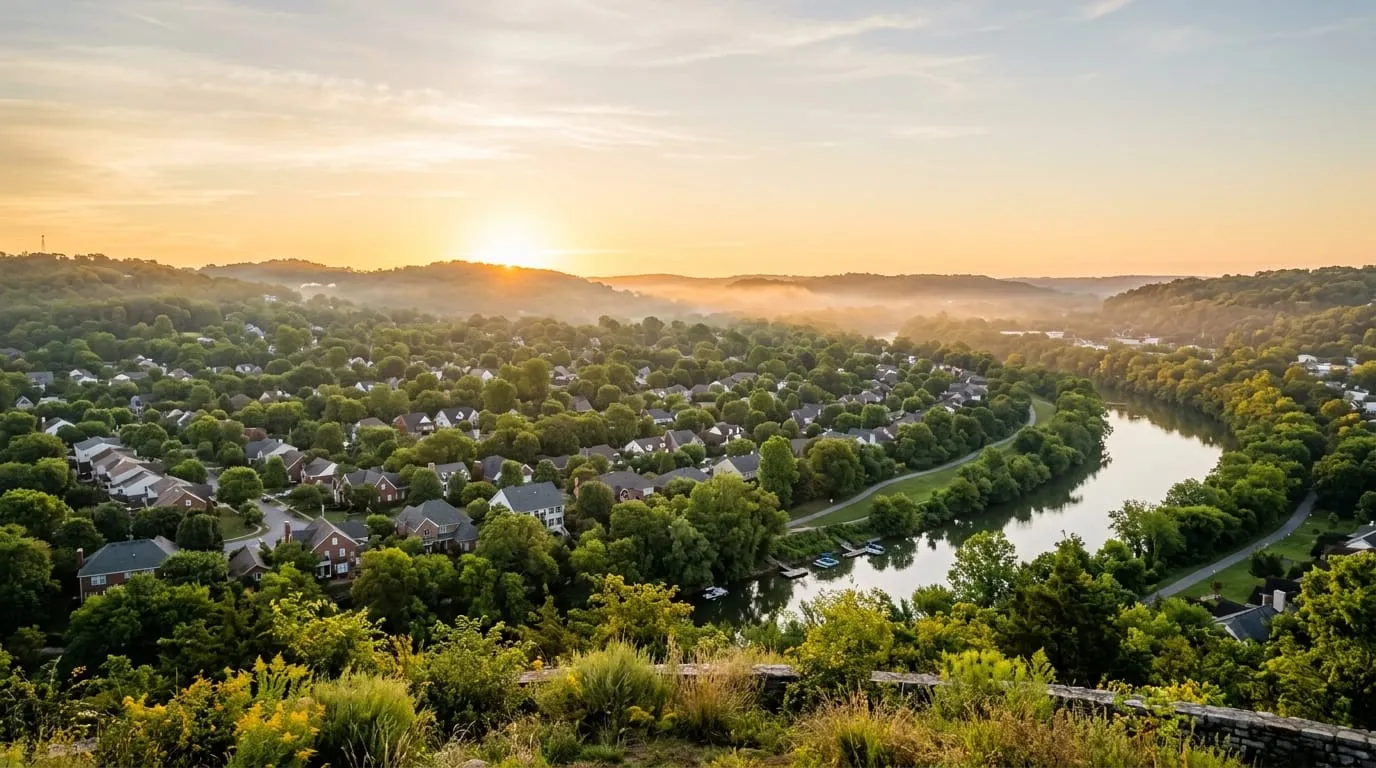

Here's my honest answer after selling homes here for years and living it every day: yes, Murfreesboro is a good place to live for most people, and the numbers back that up. You get a real city of about 171,000 people (U.S. Census, July 2025 estimate) with no state income tax, a median home value in the low 400s, a big state university anchoring the economy, and Nashville sitting 35 miles up I-24. What the ranking sites leave out is the other half of the truth. Traffic has gotten worse, the growth is real and it has a cost, and "affordable" means something different than it did five years ago. I'd rather you hear all of that from me now than discover it after you've closed. If you're weighing a move, my full Murfreesboro homes for sale hub is the place to start, and this page is the honest gut check that goes with it.
Let me give you both sides, with sources, and then you decide.
The Short Version: Who Tends to Be Happy Here
Before the pros and cons, the fair way to frame it. Murfreesboro fits people who want a mid-size city with room to grow, a short reach into Nashville without Nashville prices, and a strong sense of a real hometown underneath the growth. It's a harder fit if you need big-city transit, a nightlife scene that runs past midnight, or a commute that never touches an interstate. I say who a place fits by lifestyle and budget, never by anything else, because that's both the law and the right way to do this job. Now the details.
The Pros of Living in Murfreesboro
The location is the headliner. Downtown Murfreesboro sits about 35 miles southeast of downtown Nashville straight up Interstate 24, which on a good morning is a 40 to 45 minute drive and on a bad one is more (I'll get to that in the cons). You're close enough to work, fly out of BNA, or catch a show, and far enough that you're not paying Davidson County prices for the privilege. The city also calls itself close to the geographic center of the state, which is why it grew up as a crossroads in the first place.
No state income tax. Tennessee doesn't tax earned income, full stop. That's a genuine dollars-in-your-pocket difference from most of the states my relocation clients move from, and it's one of the first things a family from Illinois or California notices on their first paycheck here.
The cost of living is still reasonable, with an asterisk. Median household income in Murfreesboro was about 80,000 dollars over the 2020 to 2024 period (U.S. Census), and the median value of an owner-occupied home was around 402,000 dollars in that same Census window. Property taxes are low by national standards because of Tennessee's setup: residential property is assessed at just 25 percent of appraised value, so a home appraised around 405,000 dollars carries a combined city and county tax bill in the neighborhood of 2,300 dollars a year at the 2026 certified rates. I break that math down fully on my Murfreesboro property taxes page, and I get into groceries, utilities, and the rest on the cost of living in Murfreesboro guide.
Jobs and the university anchor. Middle Tennessee State University is the economic engine most people underestimate, one of the largest universities in the state, with enrollment up about 2.2 percent in fall 2025 (MTSU News, September 2025). Beyond the campus, this corner of Middle Tennessee carries serious employment weight: the Nissan assembly plant and Amazon operations in neighboring Smyrna and the broader logistics and healthcare base across Rutherford County. A university town tends to hold its value through downturns better than a one-industry town, and that stability shows up in the housing market.
A real hometown feel under the growth. The historic downtown square with the courthouse in the middle is still the heart of the place, and the greenway system, Stones River National Battlefield, and 300-plus years of documented history give the town a spine that the newer subdivisions build around rather than replace. This isn't a bedroom community that empties out at 9 a.m. It's a city with its own center of gravity.
Mild-for-the-region weather. Winters here are easy. Murfreesboro averages only about 4 inches of snow a year, a fraction of the national average, so you get four seasons without the brutal end of any of them. Summers are hot and humid, which I'll count honestly in the cons.
The Cons of Living in Murfreesboro (The Part the Ranking Sites Skip)
Traffic and the I-24 commute. This is the number one thing I wish more relocation content told the truth about. The morning and evening rush on Interstate 24 between Murfreesboro and Nashville can turn a 40 minute drive into 70 or more, and the Tennessee DOT's I-24 widening work through the corridor has been a fact of life for commuters. In town, State Route 96 (Franklin Road and the Veterans Parkway connections), Old Fort Parkway, Medical Center Parkway, and Broad Street (US-41) all carry more cars than they were built for during peak hours. None of this is a dealbreaker, but if your job is in Nashville and you buy on the wrong side of town, you'll feel it twice a day. Picking your neighborhood around your actual commute is exactly the kind of thing I sit down and map out with buyers before they fall in love with a house.
Growth has a cost, and it's showing. Murfreesboro added roughly 18,000 residents between the 2020 census (152,769) and the 2025 estimate (171,178), a 12 percent jump in five years (U.S. Census). That growth is why the economy is strong, and it's also why the roads are crowded, why schools keep rezoning, and why you'll drive past construction on half your errands. The infrastructure is chasing the population, and in a lot of spots the population is still winning the race.
"Affordable" is relative now. Yes, Murfreesboro is cheaper than Nashville, Franklin, or Brentwood. It is not the bargain it was a decade ago. The median home value sits in the low 400s (Zillow put the average Murfreesboro home value at about 429,000 dollars as of May 2026, essentially flat year over year), and starter-home buyers feel the pinch. The upside for buyers right now is that the frenzy has cooled: homes are taking meaningfully longer to sell than they did a year ago, and sellers are negotiating again, which is a very different market than the bidding wars of 2021 and 2022. You can actually shop, inspect, and think. My live Murfreesboro listings feed is the fastest way to see what your money buys this week.
Things to do, honestly. There's plenty for families: the greenway, the Discovery Center, MTSU sports and events, the Battlefield, a solid restaurant scene downtown. If you want a dense, late-night, big-metro entertainment scene, you'll be driving to Nashville for it. That's a fair trade for a lot of people and a real limitation for others. I won't pretend it's something it isn't.
Heat, humidity, and the bugs that come with it. Middle Tennessee summers are genuinely hot and sticky, and where there's humidity there are mosquitoes. It's a manageable con, not a surprise, but it's real from about June through September.
What About Crime and Safety?
Buyers ask me this constantly, and it's a fair question that deserves a careful answer rather than a scary blog stat. Crime data varies a lot by source and by which part of the city you're looking at, and a single citywide "X crimes per 1,000" number lumps very different neighborhoods together. Rather than repeat a figure from a site that doesn't work here, I'll tell you the responsible move: pull the current numbers straight from the Murfreesboro Police Department's crime reporting and the FBI's Crime Data Explorer, and look at them block by block, not city wide. When you're serious about a specific area, I'll help you find and read those primary sources so you're deciding on facts, not vibes.
A Quick Word on Schools
Families always want the school answer, and here's how I handle it: facts and maps only. Rutherford County Schools and Murfreesboro City Schools (the city district runs the K-6 elementary level, the county district runs the upper grades) cover this fast-growing area, and because the county keeps building and rezoning, the school zone attached to any given address can change. I never give you an opinion on whether a school is "good." I help you find the exact current zone for a specific address using the districts' own zone lookup tools, and I always tell you to verify it in writing before it drives your decision. That's the compliant way and the honest way at the same time.
So, Is Murfreesboro a Good Place to Live?
For most of the buyers and sellers I work with, yes, and the pattern is clear. If you want a genuine mid-size city with a real downtown, a stable university-anchored economy, no state income tax, and Nashville close enough to enjoy but far enough to afford, Murfreesboro earns its spot on the "best places to live" lists it keeps landing on. Go in with your eyes open on the traffic and the growth, choose your neighborhood around your actual commute and budget, and it holds up. Come in expecting a small quiet town frozen in time, or big-city transit and nightlife, and you'll be frustrated.
The move that saves people the most regret isn't reading one more ranking article. It's spending 30 minutes with someone who lives it. Tell me your budget, your commute, and how you like your weekends, and I'll show you the parts of Murfreesboro that fit and steer you away from the ones that won't. Reach out any time to set up a no-pressure relocation consult, and if you're still in the research stage, my moving to Murfreesboro guide walks through the whole relocation start to finish.
Frequently Asked Questions
Is Murfreesboro, TN a good place to live?
For most people, yes. Murfreesboro offers a mid-size city of about 171,000 with no state income tax, a median home value in the low 400s, a strong university-anchored economy, and Nashville 35 miles up I-24. The honest tradeoffs are rush-hour traffic on I-24 and growth-related congestion, so choosing a neighborhood around your commute matters.
What are the pros and cons of living in Murfreesboro, TN?
Pros: no state income tax, reasonable cost of living, low property taxes (residential assessed at 25 percent of value), a stable MTSU-anchored job base, a real downtown, and mild winters (about 4 inches of snow a year). Cons: worsening I-24 and in-town traffic, rapid growth (up 12 percent since 2020), rising home prices, limited late-night entertainment versus Nashville, and hot, humid summers.
Is Murfreesboro expensive to live in?
It is more affordable than Nashville, Franklin, or Brentwood, but it is no longer a bargain. The average Murfreesboro home value was about 429,000 dollars as of May 2026 (Zillow), roughly flat year over year, and median household income is around 80,000 dollars (U.S. Census, 2020 to 2024). No state income tax and low property taxes help offset housing costs.
How far is Murfreesboro from Nashville?
About 35 miles, straight up Interstate 24 to downtown Nashville. Off-peak that's roughly a 40 to 45 minute drive; during rush hour it can run well over an hour, which is why commute-aware neighborhood selection is so important here.
Is Murfreesboro growing too fast?
It's growing fast. The city added about 18,000 residents between 2020 and 2025, a 12 percent increase (U.S. Census). That growth drives a strong economy and rising values, but it also means road construction, school rezoning, and congestion that infrastructure is still catching up to.